

In the last decade, the humble car key has been quietly replaced by fobs, and now it’s being redefined again: smartphones as car keys are shifting vehicle access from metal to software, enabling lock/unlock, engine start, personalization, and secure sharing all from a device you already carry in your pocket. Automakers and tech companies are rolling out digital car key standards that rely on Near-Field Communication (NFC), Bluetooth Low Energy (BLE), and Ultra-Wideband (UWB), while software layers add sharing, remote revocation, and telemetry. Yet with powerful convenience come important security and privacy tradeoffs. This article explores how smartphone car keys work, who’s adopting them, the real-world security landscape (including relay attacks and mitigations), regulatory and usability implications, and how drivers should prepare for a future where a lost phone could be more than an inconvenience.
What Is a Digital Car Key (Smartphone as a Key)?
A digital car key is a software credential stored on a smartphone (or smart watch) that allows the device to perform the functions of a traditional car key: lock, unlock, enable ignition/start, and sometimes control functions like remote start or trunk release. Digital keys are implemented in two main ways:
- Local, short-range interaction using NFC or UWB to mimic the physical proximity of a key; or
- Wireless, active methods using BLE or cloud-based authentication for passive/remote entry.
Major platform ecosystems Apple (Car Key in Wallet) and Google/Android (Digital Car Key / Android Digital Key) provide frameworks for manufacturers to issue and manage keys securely in the phone’s secure element or equivalent trusted environment. Carmakers implement compatibility in vehicle hardware and software, pairing the vehicle and phone through a secure setup flow.
Core Technologies Behind Smartphone Car Keys:
NFC (Near-Field Communication):
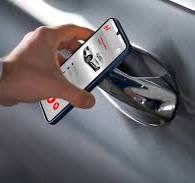
NFC is a short-range radio standard commonly used for contactless payments and access cards. For car keys, NFC allows tap-to-unlock: the user taps the phone to a reader (usually in the door handle or pillar) to authenticate. NFC’s strengths are simplicity, low battery usage, and the fact that it only works at very short ranges (a few centimeters), which reduces the risk of remote relay. NFC-based Car Key systems are widely supported as a baseline for phone-as-key features. Apple and Android both support NFC-based key operations.
BLE (Bluetooth Low Energy):
BLE enables passive or proximity-based unlock without tapping; the phone and car perform a handshake once the phone is nearby. BLE is convenient (hands-free entry), but it’s also been the subject of relay-attack research because signals can be captured and relayed by attackers, extending perceived range and enabling unauthorized access. Because BLE is active and long-range relative to NFC, manufacturers deploy additional safeguards (latency checks, cryptographic handshakes) but vulnerabilities remain a concern.
UWB (Ultra-Wideband):
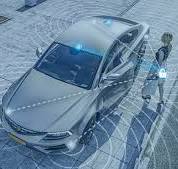
UWB is a short-range radio protocol that provides highly accurate ranging (time-of-flight) and angle-of-arrival capabilities. UWB can verify that a phone is physically next to the car (not a relayed signal from a device across the street), making it a stronger defense against relay attacks. Several automakers (BMW, Hyundai, Genesis) and phone vendors (Apple with the U1 chip, Samsung) support UWB for digital keys to enable secure passive entry. However, UWB is not a magic bullet: research shows creative attacks can still undermine even UWB systems in certain cases, and adoption across vehicle fleets is mixed.
Secure Elements, Trusted Execution & Cloud:
Digital keys are stored in a device’s secure element (a tamper-resistant chip) or secure enclave inside the phone OS. This isolates cryptographic material from the main OS and apps. Platforms also use authentication frameworks, device biometrics, and cloud attestation for remote management (suspend key, share key with another user, revoke). Apple stores keys in the Wallet and relies on the Secure Enclave; Android requires devices to meet particular security profiles (and Samsung and Google have wallet integrations). Cloud features allow sharing a key (time-limited) via messaging or account links.
Who’s Already Shipping Smartphone Car Key Support?
Automakers and smartphone makers have moved fast. Examples include:
- Apple CarKey supported on many BMW, Hyundai, Genesis, Kia, and other models Apple’s CarKey uses NFC and newer UWB-enabled flows for passive entry when available. See Apple support documentation for compatible models.
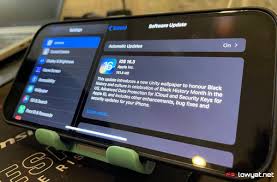
- Android Digital Car Key and vendor-specific integrations (Samsung Wallet, Google Digital Car Key) are supported on Pixel, Samsung Galaxy, and other modern devices for select car models (BMW, Hyundai, Kia, Genesis, MINI, BYD, etc.). Google’s and Samsung’s pages explain setup and compatibility details.
- BMW, Hyundai, Genesis and others have dedicated “digital key” programs; BMW’s Digital Key Plus uses UWB to provide secure passive entry.
- Tesla has long used the phone as a key via BLE and app pairing, though security researchers continue to analyze vulnerabilities.
Coverage is growing rapidly for 2024–2025 model years, but note that compatibility varies by region, trim, and phone model. If you own a phone from 2021 or later and a 2023+ car, chances are your vehicle already supports some form of digital key or will soon.
Real-World Security Landscape: Threats & Mitigations:
Digital keys change the attack surface. Below are the major security threats and how the industry is responding.
Relay Attacks:
What it is: Attackers use two devices to extend the Bluetooth or RF range of a key fob or phone: one device near the vehicle and another near the owner’s phone. The car believes the key is nearby and unlocks. BLE has been particularly vulnerable; even UWB systems have been demonstrated to be exploitable under certain conditions by highly skilled researchers.
Mitigations: UWB (time-of-flight and angle-of-arrival), stricter latency bounding, cryptographic challenge-response, proximity sensor fusion (combining GPS, motion, device orientation), and user confirmation (biometrics or tapping) help mitigate relay risks. Manufacturers are updating firmware and requiring secure elements for cryptographic keys. Nevertheless, research groups continue to find novel relay techniques that reduce latency enough to bypass some defenses, so vigilance and updates are crucial.
Lost or Stolen Phone:
If your phone is stolen, the thief could potentially use it to access your vehicle — unless countermeasures exist. Best practices include requiring biometric unlock for the digital key, enabling remote device locking/wiping (Find My / Find My Device), and using server-side key revocation. Apple and Android allow owners to remove keys remotely via account portals. Additionally, some systems require the phone to be unlocked or the car app to confirm presence to start the engine.
Malware, App Compromise & Supply-Chain Risks:
Because digital keys rely on phone OS and apps, malware or compromised apps could attempt to access secure APIs. That’s why platforms restrict key storage to secure elements and limit third-party app access. Still, users should download official manufacturer apps or use built-in Wallet integrations where possible, and keep devices updated.
Privacy Concerns:
Digital keys can generate logs of unlock events, GPS-tagged usage, and sharing metadata. Automakers and platform providers must handle this telemetry responsibly and provide user control over what is stored or shared. Read privacy policies for the car and wallet provider.
Usability & Convenience: Why Drivers Love Smartphone Keys:
- Sharing made easy: Time-limited digital keys can be sent to family members or renters without duplicating hardware, and revoked remotely. This is ideal for car-sharing and rental scenarios.
- Integrated experience: Keys in Apple Wallet or Samsung Wallet enable a single place for payments, boarding passes, and car access. Some systems personalize settings (seat, mirrors) automatically for different keys.
- No physical duplication: Lost phone? Revoke the key centrally and provision a new one; no locksmithing needed.
- Hands-free convenience: Passive entry (with BLE/UWB) lets users approach and enter the car without fumbling for keys—especially helpful with groceries or children.
Industry Adoption & Standards:
Standards are crucial for wide interoperability. The Car Connectivity Consortium (CCC) and automotive groups are advancing the Digital Key standard (Release 2 based on BLE/NFC and Release 3 adding UWB). The Connectivity Standards Alliance (Aliro / Smart Home key standards) aims to extend secure key experiences across devices and platforms. Apple, Google, Samsung and many automakers participate in these efforts to ensure consistent user experiences. As standards mature, expect broader cross-brand compatibility and easier setup.
Case Studies: Apple, Android & Tesla Approaches:
Apple CarKey (Wallet):
Apple stores digital keys in Wallet backed by the Secure Enclave and offers both NFC tap and UWB passive entry on supported iPhones (U1-equipped models). CarKey supports sharing via Messages and allows key suspension via iCloud if the device is lost. Apple’s approach emphasizes privacy and hardware-backed security. Compatible car lists are published and growing.
Android Digital Car Key & Samsung Wallet:
Google’s Digital Car Key and Samsung Wallet provide similar functionality on many Android phones. Samsung has integrated Digital Home Key and Digital Car Key into its Wallet offering, and Android’s framework supports secure element storage and sharing. Pixel and Galaxy phones from recent generations are commonly supported. Android’s flexibility can enable wider device support but also increases fragmentation risk across vendors.
Tesla Phone Key:
Tesla’s app uses BLE as a primary method for phone-as-key with features like passive entry and automatic unlocking. Tesla has been a pioneer in app-first vehicle access but has faced scrutiny over relay and BLE attack vectors; security researchers continue to analyze Tesla’s system and demonstrate potential attack vectors. Tesla responds with OTA firmware updates and app changes to improve security posture.
Vulnerabilities in Practice: What Research Shows:
Security research groups (NCC Group, academic labs) have demonstrated advanced relay attacks and link-layer manipulations that can bypass some mitigations by adding very small latencies or relaying at lower protocol layers. These findings indicate that:
- Systems must be stress-tested against practical, low-latency relay setups.
- UWB is stronger than BLE/NFC for proximity verification but not invulnerable.
- Firmware updates and layered defenses (UWB + secure element + biometric confirmation) deliver the best protection.
Manufacturers and platform providers must treat digital key security as an ongoing program: bug bounties, red-team tests, and rapid patching are essential.
Practical Advice for Users: How to Use Smartphone Keys Safely Today:
- Enable device biometric lock (Face ID / fingerprint) and require it for car key use when available.
- Register devices cautiously: prefer manufacturer apps or built-in Wallet integrations over third-party hacks.
- Keep your phone and car firmware updated — security patches matter.
- Enable remote-locate/wipe services (Find My, Find My Device) and understand how to remotely revoke keys.
- Use UWB where available for best practical protection against relay attacks; if your phone/car supports UWB, prefer passive entry enabled by UWB.
- Consider a PIN or confirmation for engine start where available (some systems allow requiring phone unlock or a tap before ignition).
- Be cautious with sharing: share keys with clear expiration and revoke after use for car-sharing scenarios.
Business & Ecosystem Impacts: Rentals, Mobility & Aftermarkets:
Digital keys unlock new business models:
- Short-term car sharing with time-limited keys instead of physical handoffs.
- Subscription or fleet management with remote provisioning and telemetry.
- Aftermarket integrations (smart locks for older vehicles) could retrofit digital key capabilities, but they must meet standards and security baselines to be safe.
- Insurance & liability: Insurers may adapt policies to recognize digital key protections or penalize poor implementations.
The Regulatory & Legal Angle:
Policymakers may need to regulate data retention (unlock logs, telemetry), define liability in thefts tied to relay attacks, and set minimum cyber security standards for digital keys (secure element requirement, OTA patching obligations). Some regions already mandate security standards for connected vehicles; digital keys extend those requirements to personal device ecosystems. Consumers should see transparent disclosures on data use and breach notification policies.
The Road Ahead: Predictions & What to Expect:
- Wider adoption across mid-range cars as standards mature and costs fall. Expect many 2026+ cars to include digital key capability.
- Interoperability via standards (Car Connectivity Consortium, Aliro/CSA initiatives) will make keys work across phones and brands more seamlessly.
- Hybrid models will persist: physical keys/fobs remain as backups, and NFC may act as a battery-dead fallback.
- Security arms race: researchers expose creative attacks and vendors iterate mitigations — expect improved defenses but no absolute guarantees.
- New experiences: tighter integration to personalization (seat/mirror presets), payments, and multi-device access (phone + watch).
Final Considerations: Balancing Convenience, Security & Policy
Smartphones as car keys are not a marginal novelty — they are a structural change in how vehicles authenticate their users, unlock features, and collect usage data. The payoff in convenience and new services is enormous, and the technology is mature enough for broad adoption. However, security researchers have shown that the threat landscape evolves as system complexity increases. The best outcomes come from layered defenses: secure hardware (secure element, UWB), conservative fallback modes (NFC tap when battery low), robust update channels (OTA firmware/security patches), clear user controls (remote revoke, sharing expirations), and regulatory guardrails for privacy and liability.
External Links & Further Reading:
- Apple — Add your car key to Apple Wallet (how-to and security model). Apple Support
- Android — Digital Car Key overview (Google’s Digital Car Key portal). Android
- NCC Group — Technical advisory on BLE relay attacks (research into link-layer relay attacks). NCC Group
- BMW — Digital Key Plus and UWB explanation. BMW
- Wired & The Verge — reporting on real-world attacks and industry moves. WIRED+1
Internal Links:
- Apple iPhone 16 Pro Max Apple iPhone 16 Pro Max
- For Mobile Specifications Click Here
- Huawei Mate XTs Ultimate Huawei Mate XTs Ultimate

Leave a Reply