
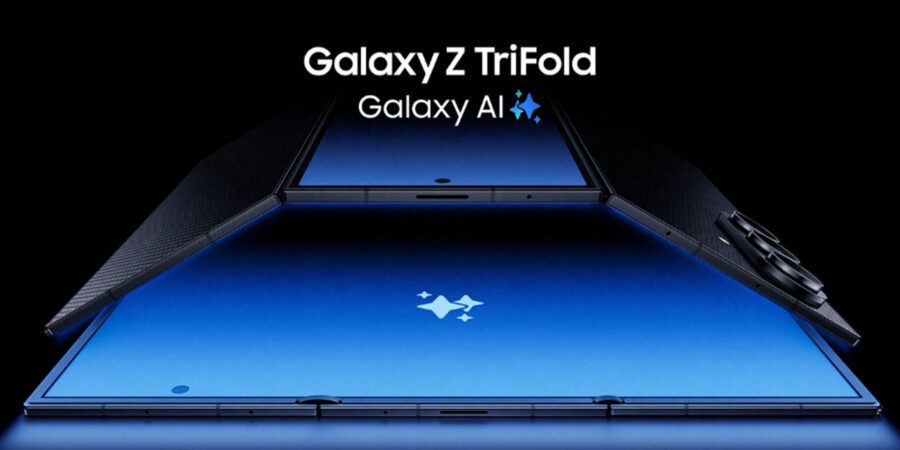
The Samsung Galaxy Z Trifold is shaping into one of the most anticipated breakthroughs in mobile design. Here’s the thing. Every few years the smartphone world hits a point where everything starts to feel the same. Screens get brighter. Cameras get sharper. Processors get faster. But the real magic happens when someone changes the shape of how we use technology. The Galaxy Z Trifold steps right into that gap. It isn’t just another foldable. It represents a shift in how a phone, tablet, and productivity tool can merge into one fluid device. If Samsung executes this vision the way early leaks suggest, the Galaxy Z Trifold could easily become the blueprint for future devices.
What this really means is that we might be witnessing a new category of mobile hardware built around flexibility. And not the gimmicky kind. Real versatility. Real productivity. Real entertainment value. So let’s break it down and explore what the Samsung Galaxy Z Trifold could become, why it matters, and how it could change your interactions with technology.
1. A New Class of Foldable: What Makes a Trifold Different?
People have seen foldable before, but the trifold idea hits a different nerve. Instead of a single hinge running down the middle, the Galaxy Z Trifold uses two hinges and three connected display panels that fold inward like a brochure or outward into a full tablet layout. This gives it a shape-shifting personality.
Imagine walking around with a device that folds to the size of a thick phone, opens into a dual-screen mini tablet, and then expands further into a nearly laptop-sized layout. Suddenly your phone feels like three devices in one. It’s not just about screen size. It’s about mind-space. The freedom to restructure your device depending on where you are, what you’re doing, and how fast you need to adapt.
Samsung has always led the pack in foldable engineering, but the Trifold is a different beast. Instead of a single flexible OLED panel bending in one direction, engineers need displays that flex in multiple locations without weakening over time. That takes new materials, new hinge technology, new polymers, and a lot of patience.
If Samsung delivers on durability, usability, and ergonomics, this Trifold will become the brand’s most ambitious piece of engineering since the original Galaxy Fold.
2. Design Philosophy: Minimal Bulk, Maximum Usability
The biggest concern with any foldable is obvious. Bulk. When you add a second hinge to a device that already tends to feel thicker than a normal phone, you risk creating something that resembles a futuristic sandwich rather than a sleek daily carry. Samsung seems aware of this.
Here’s what users actually want:
- A device that feels like a phone when folded
- A device that feels like a tablet when opened
- A device that avoids unnecessary weight or awkward proportions
That’s the standard Samsung is chasing. If early concept models hint at the direction, the Galaxy Z Trifold may use ultra-thin glass, advanced hinge stabilization, and a frame that redistributes pressure so the device doesn’t feel top-heavy.
The interesting part is how the Trifold’s design philosophy quietly shifts expectations. Instead of thinking of a foldable as a phone that opens, the Trifold positions itself as a mobile workstation that compresses. That mindset shift is going to attract creators, remote workers, gamers, and people who need something more dynamic than a standard slab phone.
3. Display Technology: Three Panels, One Fluid Experience
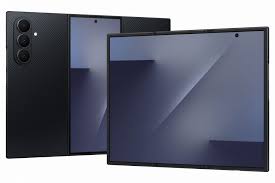
The Samsung Galaxy Z Trifold’s display will likely be its headline feature. After all, nobody buys a trifold phone for the camera first. You buy it for the screen.
You unfold the device and see a nearly uninterrupted ultra-wide canvas. No bezels that break the flow. No hinge shadows that distract you. Just pure visual immersion.
Samsung has been perfecting flexible OLED for years. The Trifold pushes that experience further with synchronized panel refresh, multi-panel touch response, and a dynamic interface that adapts to whichever mode you’re in.
Three display modes users care about:

1. Compact Phone Mode:
The folded state behaves like a typical smartphone. You get a front cover display for quick tasks, notifications, and single-hand use.
2. Dual-Panel Mode:
Unfolding one section gives you a layout perfect for multitasking. Maybe you watch a video on one side while scrolling comments or taking notes on the other. It mirrors having two side-by-side monitors.
3. Full Trifold Tablet Mode:
This is the main event. All three panels combine into one expansive screen. Perfect for gaming, drawing, editing, spreadsheets, research, and long-form reading.
Samsung’s software team knows how to optimize Android for big screens better than anyone in the field. The company already developed Flex Mode, Multi Window, and advanced gesture controls that make its tablets smoother than most competing models. Expect those systems to evolve dramatically in the Trifold.
4. Performance: Built for Power Users Who Don’t Want Limits
A device like the Samsung Galaxy Z Trifold wouldn’t survive without serious horsepower. It needs a top-tier processor, advanced cooling, and efficient battery management.
Users expect:
- Zero stutter, even in full tablet mode
- Smooth transitions between folding states
- Strong gaming performance
- Desktop-level multitasking
Samsung will likely pair the Trifold with the newest Snapdragon flagship processor or its next-generation Exynos companion, depending on region. Throw in at least 12 to 16GB of RAM and you have a mobile workstation that rivals mid-range laptops.
Storage options should start at 256GB and probably climb to 1TB for creators who need local file access. As apps become heavier and 8K video recording becomes common, that extra storage matters.
Battery life remains the hardest part of foldable engineering. Three panels require more power. Larger surface areas generate more heat. But Samsung’s battery optimization in recent Galaxy devices has been impressive, and they’ll need to take that further here. Expect multi-cell battery architecture, improved heat dissipation, and software-driven power balancing that adapts to how you use the device.
5. Camera System: A Foldable That Doesn’t Compromise on Photography
Foldable often lag behind traditional smartphones in camera quality, mostly because manufacturers prioritize design complexity over imaging sensors. But Samsung knows it can’t cut corners with a high-end device like the Galaxy Z Trifold.
The camera setup will likely include:
- A primary high-megapixel sensor with optical image stabilization
- An ultra-wide lens designed to capture broad scenes
- A telephoto lens capable of at least 3x optical zoom
- Advanced low-light computational photography
Now here’s the interesting part. Foldable designs allow creative camera placements. When the Trifold is partially opened, it can act as its own tripod. That means steadier night shots, stable long-exposure images, hands-free recording, and improved selfies. Samsung already implemented this in Flex Mode, and the Trifold simply expands that potential.
Creators can frame shots more naturally. Vloggers can use the expanded screen as a live preview monitor. Mobile photographers can edit photos on a tablet-size display moments after capturing them.
That level of control isn’t just convenient. It makes the Trifold feel like a portable creative studio.
6. Software Experience: The Real Magic Behind the Trifold
Hardware is only half of the equation. A trifold device is only as good as its software. Samsung has invested heavily in One UI’s adaptive interface, and the Galaxy Z Trifold will be the ultimate testing ground.
Expect the following improvements:
Adaptive Layout Shifting:
The device needs to recognize how you’re holding it in real time. If you open one panel, the UI should reorganize itself instantly. If you open both, it should transition into a tablet layout without lag or visual artifacts.
Multitasking on a New Level:
Think three apps open at once.
Think drag-and-drop between panels.
Think desktop-class window management.
This is where Samsung can overtake its rivals. People use phones for work more than ever. A device that becomes a mobile command center will attract professionals in every field.
Enhanced S Pen Integration:
Foldable already support the S Pen, but the Trifold’s larger display is perfect for writing, drawing, editing, annotating, and digital planning.
With a near-A4-sized workspace, note-taking becomes far more natural. Artists will love the elbow room. Students can ditch paper notebooks entirely. Marketers, product designers, and UX teams can sketch wireframes on the go.
7. Gaming on the Trifold: A Handheld Console in Your Pocket
The gaming community will pay close attention to this device. The expanded screen turns mobile gaming into a more immersive experience. Titles with complex UI elements benefit from increased space, making everything easier to navigate.
Expect:
- Smoother frame rates
- Better thermal control
- PC-like game streaming
- Support for external controllers
- Multi-angle mode for tabletop gaming
Cloud gaming services like Xbox Game Pass and GeForce Now already thrive on Samsung devices. With a trifold display, the experience becomes even closer to holding a compact gaming laptop.
8. Battery Life: The Balancing Act
Here’s where Samsung needs to get clever.
Three displays demand more power, yet users don’t want a device that dies before the day ends. The solution probably lies in a multi-battery system that balances energy consumption based on the screen mode.
Phone mode uses one section.
Dual mode uses two.
Tablet mode activates all three.
Samsung’s AI-driven power optimization will play a huge role. Apps that don’t need full resolution will downscale accordingly. Background processes will be managed more aggressively. The challenge is real, but so is the progress Samsung has made in battery efficiency.
9. Why the Galaxy Z Trifold Matters So Much for the Future of Tech
If Samsung pulls this off, they won’t just launch a new device. They’ll create a ripple effect across the entire mobile industry. Competitors will scramble to build their own trifolds. App developers will optimize for large dynamic screens. Accessory makers will create stands, pens, keyboard cases, and more.
A successful Samsung Galaxy Z Trifold becomes a benchmark. A reference point. A sign that consumers want more than predictable upgrades.
This is how innovation accelerates.
10. Use Cases That Make the Trifold More Than a Concept
Students
A single device that replaces:
- A laptop
- A tablet
- A phone
Study, write, research, and collaborate without switching screens.
Professionals
From spreadsheets to video calls to document editing, the Trifold brings workstation capabilities into a portable format.
Creatives
Illustrators, video editors, writers, photographers they all gain new freedom with a transformable digital workspace.
Travelers
Navigation, entertainment, translation tools, itinerary management the Trifold offers convenience in every mode.
Gamers
Console-style experiences on the go. Responsive, powerful, and visually rich.
11. Pricing Expectations and Market Position
Foldable tech isn’t cheap, and trifolds push the difficulty level even higher. Expect Samsung to position this device in the ultra-premium category.
A realistic price range might land between:
1999 USD and 2499 USD
This places the Galaxy Z Trifold in the same conversation as high-end laptops and flagship tablets. But here’s the thing: people already pay similar amounts for multiple devices. Combining them into one could justify the investment.
Samsung has a knack for creating halo products that showcase the company’s engineering power. The Trifold might become the crown jewel of that lineup.
12. External Links
- Samsung’s foldable lineup continues to evolve rapidly, and you can see their official product ecosystem here: https://www.samsung.com/global/galaxy/
- Industry analysts have also been tracking the rise of multi-panel displays: https://www.androidauthority.com/foldable-phones/
13. Internal Links
- Samsung Galaxy S25+ Key Features and full specifications Samsung Galaxy Z Fold5
- Apple iPhone 16 Pro – Features, Specs & Local Price Guide 2025
- Huawei Mate 80 RS Ultimate – Features, Specs

Leave a Reply