Global Impact of the US-Israeli War on Iran: Economic, Security and Humanitarian Consequences: The 2026 US-Israel military offensive against Iran has shattered decades of Middle East balance and sent shockwaves around the world. The conflict – triggered by massive airstrikes on Iranian nuclear and military sites – killed Iran’s Supreme Leader Ali Khamenei and top officials, prompting swift retaliatory missile and drone attacks by Iran against Israel, US forces, and Gulf states. The immediate fallout has been staggering: energy markets surged, global supply chains buckled, flights and shipping routes were disrupted, and even emergency UN sessions were convened. This article examines how the US-Israel-Iran war has affected the world’s economy, security, and humanitarian landscape, and how governments and organizations have reacted.
Economic, Security and Humanitarian Consequences
The war erupted on February 28, 2026, when the United States and Israel launched nearly 900 aerial strikes on Iran’s missile bases, air defenses, nuclear sites, and leadership. President Trump justified the operation as a preemptive measure to eliminate “imminent threats” from Iran and stop it from obtaining nuclear weapons. The first wave killed Ayatollah Khamenei and key generals. Iran immediately retaliated by firing ballistic missiles at Israel and US bases across the Gulf (Kuwait, Bahrain, Qatar, UAE, etc.). Within days the fighting escalated: Israel struck targets in Iran’s cities, and Iran’s proxies (including Hezbollah in Lebanon and Houthi forces in Yemen) opened new fronts. The U.S. even reported sinking an Iranian warship in the Indian Ocean. As one analysis put it, the war “has now escalated into a regional conflict, and consequences are already extending far beyond the Middle East”.
Although the conflict remains centered in the Middle East, its global effects are already profound. Flights out of the region have nearly halted, world trade routes have been rerouted, and global oil prices have spiked as Iran effectively closed the Strait of Hormuz. International bodies have reacted with alarm. The United Nations Security Council convened on Feb. 28, with Secretary-General António Guterres warning that “we are witnessing a grave threat to international peace and security” and demanding respect for the UN Charter and protection of civilians. These diplomatic shockwaves join the ongoing humanitarian and economic crisis unfolding on the ground.
International Response and Diplomatic Fallout
World governments have responded in widely differing ways, reflecting geopolitical interests and legal concerns. In Geneva and New York, UN officials condemned both the US-Israeli strikes and Iran’s reprisals, stressing that “military action carries the risk of igniting a chain of events that no one can control”. The UN High Commissioner for Human Rights, Volker Türk, condemned attacks on civilians and infrastructure on all sides and urged “maximum restraint” and a return to dialogue. UN humanitarian chief Tom Fletcher warned that “the humanitarian consequences of the escalating violence are already spreading across the region,” as homes, hospitals and schools come under fire. Even the IAEA, wary of nuclear danger, activated emergency monitoring, though no radiation has been detected yet.
Key world powers have treaded carefully. China, Iran’s main economic ally, issued only bland calls for restraint and evacuated its citizens, balancing its energy needs against US pressure. Russia publicly denounced the attacks as destabilizing but stopped short of concrete support for Iran, wary of a broader war. Within NATO, there was no automatic invocation of collective defense, but concern was evident. For instance, a ballistic missile fired from Iran toward Turkey on March 4 was shot down by NATO defenses, and NATO quickly raised its regional air defense posture. Britain and the US discussed Middle East patrols, while some European governments faced domestic pressure. France and the UK (both longtime NATO allies) sent warships to the Mediterranean in solidarity, whereas Spain refused US requests for military base access. In fact, even countries normally aligned with the West split over this. Some EU leaders openly questioned the strikes’ legality as a war of choice, fearing double standards with respect to Ukraine. Others urged cohesion with the US as a bulwark against Iran’s destabilizing influence. Overall, Europe is “caught between defending the rules-based order and aligning with Washington,” according to an Atlantic Council analysis.
Outside the West, reactions vary. Canada expressed strong moral support for US actions to block Iran’s nuclear program, though it is not militarily engaged. Ukraine watched closely: some Ukrainians took a grim pleasure that Iran’s power was checked (given Iran’s support for Russia in Ukraine), but also worried that higher oil revenues for Russia could fund more aggression. In Latin America, Argentina’s new government – scarred by past Iran-linked terrorism – loudly hailed the strikes as removing a “threat”, whereas Brazil and Mexico were more cautious, calling for restraint. In short, there is a patchwork of concern, support, and condemnation. The EUAA (Europe’s asylum agency) even warned that displacing 10% of Iran’s 90 million people could create a refugee movement “of an unprecedented magnitude”. Such reactions reflect that, as one observer noted, “the outbreak of conflict between three widely impactful countries led to a burst of reactions, ranging from anticipation to condemnation to confrontation”.
Economic and Energy Impacts
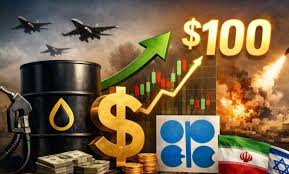
Here’s the thing: the US-Israel-Iran war immediately shook the global economy. Iran sits on some of the world’s largest oil reserves, and 20% of global petroleum trade moves through the Strait of Hormuz. On March 2, Iran essentially closed the strait, threatening any ship that tried to pass. Within hours, about 20 million barrels per day of crude flow were effectively “frozen out of the global markets,” according to Thomson Reuters, pushing Brent oil up over 13% to the mid-$80s per barrel. Analysts warned prices could hit $100–200/bbl if the crisis continues. Indeed, global insurance firms rapidly canceled war-risk coverage for Persian Gulf shipping, meaning tankers have been anchoring in the Gulf instead of docking. Already by mid-March, insurers like Gard and Skuld had pulled coverage, crippling exports through Hormuz
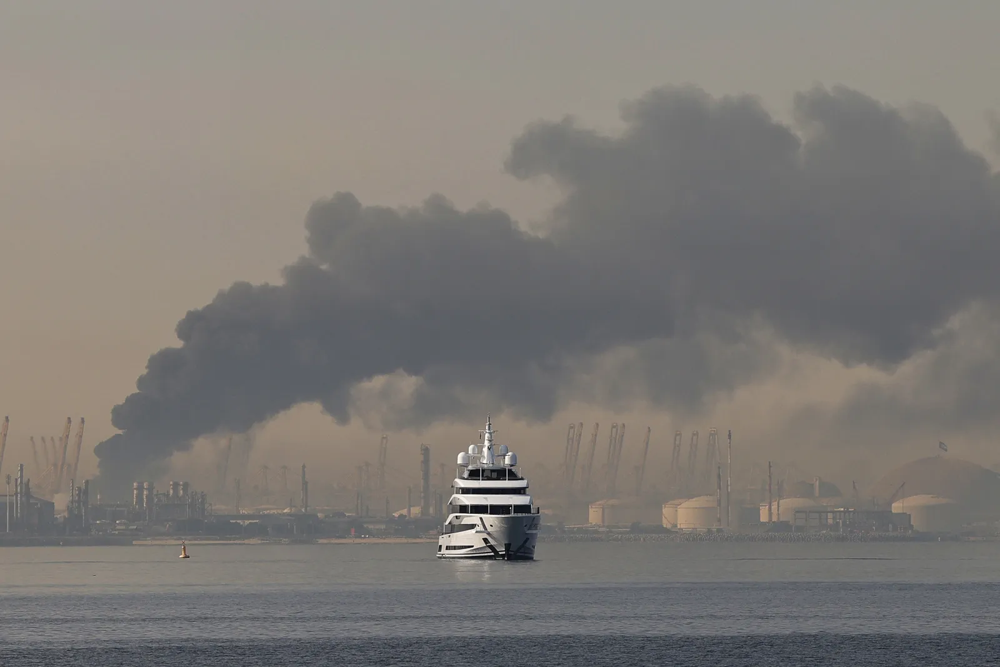
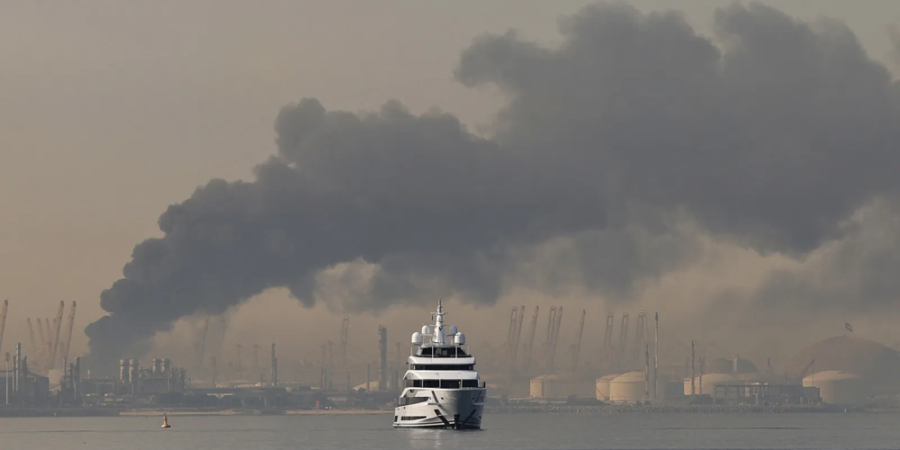
Oil is not the only market in shock. The conflict has created a “dual-chokepoint” shipping crisis that has no modern precedent. Alongside the Hormuz blockade, Houthi rebels in Yemen – closely allied with Iran – have resumed attacks on vessels in the Red Sea and Bab el-Mandeb strait. Together, these two routes handle roughly one-third of global seaborne oil, as well as massive volumes of container cargo. As a result, all five major container shipping lines (Maersk, MSC, etc.) suspended transits through Hormuz and are diverting ships around Africa. This detour adds weeks to deliveries and tightens already-scarce vessel availability. Even Asia–Europe trade, which doesn’t obviously involve the Gulf, will see cascading delays as ships take longer routes and ports cope with extra traffic. Air freight hubs in Dubai, Doha, and Abu Dhabi have also been hit – for example, Dubai Airport was forced to suspend flights after a drone strike – so the usual “fallback” of air cargo is limited. In short, global supply chains in everything from electronics to clothing to perishables are under strain. Companies are scrambling for alternative routes and higher freight costs, warning that prices on consumer goods could rise in the months ahead.
Financial markets have reacted in kind. Stock indexes worldwide fell as investors braced for inflationary pressure and a global slowdown. U.S. Treasuries surged (yields fell) as traders moved money into safe assets, while gold and the dollar strengthened. Emerging-market currencies have weakened, driven by fears of debt and commodity shocks. (For example, oil importers in Europe and Asia face steep fuel bills, while oil-exporting Russia and Gulf states benefit.) Central banks have signaled they may delay any rate cuts given the risk of sticky inflation. We can expect higher prices for gasoline, natural gas, and food staples as shipping bottlenecks and higher energy costs ripple through. Some analysts warn that if the situation drags on, we could see a global recession akin to 1970s oil shocks or worse.
Key Economic Effects at a Glance
- Oil & Energy Prices: Brent crude rose above $80/barrel immediately; analysts project $100+ if Hormuz stays closed. Natural gas prices also spiked, especially in Europe.
- Shipping Disruption: ~33% of sea trade (via Hormuz & Suez) is affected. Major shipping firms halted Gulf transit and rerouted via Africa, adding weeks of delay and higher costs.
- Supply Chains: Global container cargo and air freight are delayed, threatening shortages of goods and raw materials worldwide.
- Inflation & Recession Risk: Cost of living could jump; economic models show a sustained 30-day crisis may tip major economies into recession.
In response, governments are taking urgent measures. The G7 countries have vowed to pump more spare oil into markets if needed. On social media, President Trump even promised insurance subsidizes to keep Gulf shipping lanes open. Meanwhile, companies are diversifying supply chains out of the crisis zone, at least temporarily. Still, any hope of a quick fix is guarded. As one energy analyst noted, “it’s not a normal short-term supply shock – it’s akin to putting the world on wartime footing”.
Humanitarian and Refugee Consequences
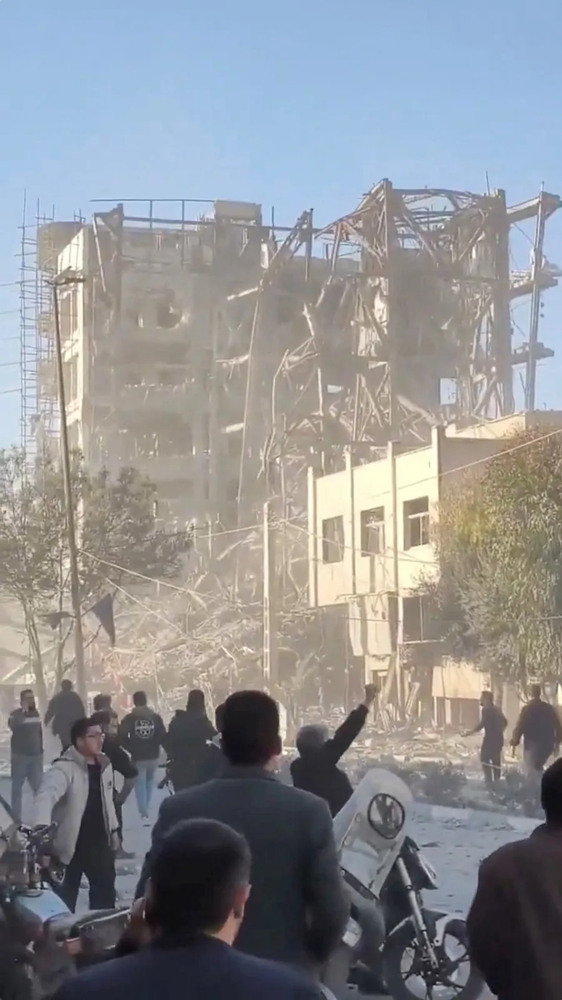
On the ground, civilians have already paid a heavy price. Iranian air defenses failed to stop all incoming fire, and Western reports confirm that the US–Israeli strikes killed civilians. Notably, a missile struck a girls’ school in Minab, Iran, killing over 160 students. Iran’s retaliatory strikes – some of which have hit energy facilities and even civilian vessels in the Gulf – likewise endanger non-combatants. The United Nations and Red Cross warn that civilian casualties will mount if the fighting spreads further.
As violence spreads across borders, a refugee crisis is looming. Even before 2026’s war, the Middle East hosted over 25 million refugees and IDPs from Syria, Iraq, Yemen and elsewhere. Now, renewed hostilities are uprooting more people. In Lebanon, for example, Israeli evacuation orders have already driven about 100,000 civilians into shelters. If Israel’s attacks on Hezbollah intensify, Lebanon could see mass displacement. Meanwhile, Iran’s southern province (near the Persian Gulf) has seen fighting, and any sustained Iranian counterattack might drive rural communities into neighboring Pakistan, Afghanistan, or Turkey.
Some international organizations are sounding the alarm. The European Union’s asylum agency warned that if just 10% of Iran’s population were forced to flee, that nine million new refugees “would rival the largest flows of recent decades”. So far, official Iranian refugee applications remain relatively low (around 8,000 in the EU in 2025), but even moderate outflows could strain neighboring countries. The International Organization for Migration (IOM) has explicitly warned of “a displacement risk” tied to this war. The IOM notes that more than 19 million people in the region are already displaced by conflict, making it “vulnerable to further instability”. Similarly, UNHCR (the UN refugee agency) is preparing for new emergencies. Hundreds of thousands of people have become internally displaced in Iraq, Syria, Iran and other states as infrastructure and camps come under attack. NGOs report that hospitals and schools in Iran, Lebanon, Syria, and the Gulf are on the front lines, with children and the elderly especially at risk.
Taken together, what started as a limited air campaign has created a major humanitarian crisis. Within a week, the UN tally of deaths had reached well over a thousand, including civilians on all sides. Refugee camps that were already overcrowded may see new arrivals. Europe, which has rebuilt its asylum system since 2015, is bracing for a possible surge – although as of early March officials say “no signs” of a major influx yet. Still, Sweden’s migration minister cautioned, “things can change very quickly,” citing past crises. The immediate priority is protecting civilians: the UN has called for safe corridors, and aid groups are rushing food, medicine, and tents to border regions. But even with that, experts fear the conflict “could cast a long shadow for years” on the lives of millions.
Regional and Global Security Effects
Security dynamics have shifted dramatically. The Iran conflict has drawn in non-state actors and global naval forces alike. Hezbollah has resumed rocket attacks on Israel, prompting Israeli shelling in Lebanon. Tehran’s clients in Yemen and Syria have been more aggressive at sea and in cyberspace. The U.S. Navy has been clearing mines and escorting tankers in the Gulf – a military burden not seen since the 1980s “tanker war” era. A worrying sign: the U.S. fired a Tomahawk missile that accidentally downed three allied jets over Kuwait, underscoring the fog of war. Meanwhile, global terror alerts are up. Europol has warned of higher risks of terrorist and cyber retaliation in Europe and worldwide.
One immediate effect: heightened nuclear anxieties. In Washington and Jerusalem, officials publicly ruled out regime change but professed interest in influencing Iran’s leadership succession. Iran’s provisional leadership – the Revolutionary Guards – is more hardline and isolated. Some experts fear Iran might accelerate any clandestine weapons programs once it is under attack. The IAEA has stepped up inspections around the clock. For now, Iran’s known nuclear sites (Bushehr reactor, Natanz, etc.) are reportedly intact, but global watchdogs are on edge. Key U.S. and Israeli goals – neutralizing Iran’s nuclear infrastructure – may be only partly achieved by airstrikes, meaning future proliferation risk remains. What this really means is that nuclear non-proliferation regime is under stress: nations like Saudi Arabia or Egypt are watching closely and may rethink their own policies in response to perceived U.S. weakness or distraction.
Beyond nuclear concerns, the alliance landscape is shifting. NATO has boosted Eastern Mediterranean patrols and missile defenses, signaling that an attack anywhere could have wider ramifications. The U.S. has also sent additional forces to deter attacks on its bases. However, no new major wars have broken out – e.g., Russia has so far refrained from opening a new front, focusing on Ukraine. Yet by demonstrating the U.S.’s willingness to use force preemptively, the war may make rivals (like China or Russia) more wary or opportunistic in their own theaters. For example, one Ukrainian analyst noted the irony that when Iranian drones threatened Ukraine, the West was preoccupied elsewhere.
In sum, the security fallout is profound and unpredictable. The “rules-based international order” has taken a hit: many commentators pointed out that the US and Israel flouting UN rules undermines moral authority on issues like Ukraine. Middle East states are already hedging – Turkey increased air defenses, India and China sought more Iranian energy deals, and Gulf states pressed for de-escalation. What this really means is a decade of diplomatic realignments could follow.
Future Scenarios and Conclusion
Where do we go from here? Analysts outline three broad scenarios. In the best case, Iran’s regime collapses quickly under internal dissent (encouraged by Trump’s calls to “take over your government”), ushering in a deal and restoration of oil flows. Then global markets could breathe, with oil prices falling back to $70–$80 and displaced tankers resuming normal routes. However, that rapid-case is deemed unlikely soon – Iran’s security forces remain intact and regional proxies are rallying to defend the regime.
More likely is a prolonged war with intermittent reopenings of Hormuz. In that middle scenario, Iran can’t fully blockade the strait against U.S. naval might, but sporadic tanker attacks keep insurance high. Oil might stay around $80–$100 for months, causing sustained inflation and forcing importers to ration or find alternatives. Global GDP growth would take a hit. Shipping will slowly adapt (via Cape of Good Hope) but at high cost. Civilian suffering would continue, pressuring international mediators to seek a truce.
The worst case is a sustained, full closure of Hormuz with repeated attacks. In that “tail risk,” energy traders warn that 20% of daily petroleum trade could disappear indefinitely. Estimates show such a blockade could push Brent crude near $200 and slam the brakes on the global economy. Food price spikes, credit crunches, and cascading defaults in vulnerable economies could follow. In humanitarian terms, millions of Iranians might flee (Iran is increasingly “at war with its own people,” said EU analysts). International responses would harden: we might see expanded sanctions, even talks at the UN on security or new interventions.
What this really means is that the US-Israel-Iran war will reshape the world order. Already, governments from Washington to Beijing to Brussels are reassessing their strategies on arms, energy, and alliances. For now, the conflict shows no sign of abating – political leaders are doubling down. Secretary of State Marco Rubio even justified the initial attack partly as preemptive self-defense on behalf of Israel, while Iran’s officials vow to fight on.
For global citizens, the immediate fallout is clear: energy will cost more, goods will take longer to arrive, and global markets will jitter. In the near term, air travelers should brace for cancelled flights, and importers should expect shipping delays. Over months, economies will factor in higher inflation and slow growth. Humanitarian agencies warn that keeping aid flowing to a rising number of war victims will be the biggest challenge. And on the diplomatic front, expect an intensely fractious UN and a more polarized international community.
In sum, the 2026 US-Israel-Iran war is not an isolated Middle East skirmish – it has already become a global crisis. It has disrupted energy supplies, rattled markets, triggered refugee fears, and tested the rules of international law and security. Countries around the world are now watching carefully, reacting in varied ways, and preparing for all possible outcomes. The conflict’s ultimate toll is still unfolding, but one thing is clear: its effects on the world economy, geopolitics, and human lives will be felt for years to come
External Links
Internal Links
Web Based Online Store Click here WBOLS
See all Classified Listing Click here All Listings