Introduction:
The evolution of mobile networks has transformed the way we live, work, and connect. From the early days of 2G and 3G to the revolutionary 4G LTE, and now the arrival of 5G connectivity, the world has entered a new era of high-speed digital communication. In this article, we will explore in detail the differences between 4G and 5G, their importance in modern society, and the features that make them unique. Additionally, we will discuss how 4G and 5G technologies impact industries, consumers, and the future of global connectivity.
In this article, we’ll cover:
- The differences between 4G and 5G
- The importance of both generations of networks
- Their unique features
- Impact on industries and daily life
- Future trends and upcoming technologies beyond 5G
By the end, you’ll clearly understand why 4G vs 5G is not a battle of replacement but rather a co-existence of two powerful technologies.
What is 4G?
4G, or the fourth generation of mobile networks, launched globally around 2009–2010. It quickly became the backbone of digital transformation, enabling mobile apps, video streaming, and digital banking.
Key highlights of 4G:
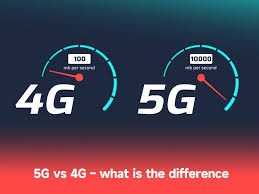
- Data Speeds: Up to 100 Mbps on average, with peak speeds around 1 Gbps.
- Latency: Around 50–100 ms.
- Features: HD video calling, seamless streaming, mobile gaming, app-driven economy.
- Technologies: LTE (Long-Term Evolution), LTE-Advanced.
Without 4G, apps like Netflix, TikTok, YouTube, and Uber would never have been practical. It allowed smartphones to evolve from basic communication tools to all-in-one entertainment and productivity devices.
What is 5G?
5G, or the fifth generation of mobile networks, started rolling out commercially in 2019. It represents more than just faster speeds—it is a revolutionary digital infrastructure designed to handle the future of connectivity.
Key highlights of 5G:
- Data Speeds: Up to 10 Gbps (100x faster than 4G).
- Latency: <1 ms (critical for real-time applications).
- Capacity: Supports up to 1 million devices per square kilometer (perfect for IoT and smart cities).
- Reliability: Extremely stable with minimal downtime.
- Energy Efficiency: Lower power consumption for connected devices.
Imagine an autonomous car communicating in real-time with traffic lights, other vehicles, and pedestrians. 4G cannot handle such ultra-low latency, but 5G makes it possible.
Detailed Differences Between 4G and 5G:
Here’s a deep comparison of 4G vs 5G:
1. Speed:
- 4G: 100 Mbps – 1 Gbps
- 5G: 1 Gbps – 10 Gbps
With 5G, you can download a 2-hour movie in less than 5 seconds, while 4G would take a few minutes.
2. Latency:
- 4G: 50–100 ms
- 5G: <1 ms
Low latency is crucial for remote surgeries, online gaming, AR/VR experiences, and smart factory automation.
3. Coverage & Availability:
- 4G: Wide coverage, even in rural areas.
- 5G: Limited coverage currently, focused on urban hubs.
4. Use Cases:
- 4G: Social media, online shopping, video streaming.
- 5G: Autonomous vehicles, smart homes, telemedicine, industrial robotics.
Importance of 4G and 5G in Society:
Both 4G and 5G are equally important but for different reasons.
- Economic Growth: 4G helped build trillion-dollar industries like ride-hailing (Uber), food delivery (DoorDash), and video streaming (Netflix). 5G will power AI-driven industries, automation, and smart cities.
- Healthcare: 4G allowed online doctor consultations, while 5G enables remote robotic surgeries.
- Education: 4G brought online classes; 5G will bring immersive VR classrooms.
- Entertainment: 4G enabled Netflix and YouTube; 5G enables AR/VR metaverse experiences.
Future of 4G and 5G:
Experts predict:
- 4G will remain dominant until 2035, especially in rural areas.
- 5G will cover 60% of the world by 2030.
- 6G is expected by 2030, bringing terahertz speeds and AI-driven networks.
Conclusion:
4G vs 5G is not about replacement. 4G is still vital for affordability and global connectivity, while 5G is shaping the future of smart cities, autonomous vehicles, and real-time technology.
External Sources
Internal Links (for topical authority)