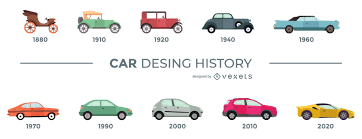
The history of automobiles is a rich story of invention, industry and culture — from early automobiles like steam carriages and Karl Benz’s 1886 Motorwagen through the evolution of cars driven by mass production, safety and emissions technology, to modern electric and autonomous vehicles. This article walks the full automotive history timeline, highlights critical automotive milestones, and explains how innovations shaped how we move.
1. Introduction: Why the history of automobiles matters:
The automobile is more than a machine — it’s an engine of economic growth, social change, and personal freedom. Studying the history of automobiles reveals how technical advances (engines, materials, electronics), industrial practices (mass production), and policy (safety and emissions) combined to change cities, economies and everyday life. The evolution of cars maps human priorities: speed, comfort, affordability, environment, and now autonomy.
2. Before the car: prerequisites for an automotive revolution:
The car did not appear in isolation. Roads, metallurgy, precision engineering, chemical fuels, and electrical systems were necessary foundations.
- Roads & infrastructure: Improved turnpike roads and later paved roads enabled higher-speed travel.
- Steam & internal combustion technology: Steam engines proved mobile power was possible; later, compact internal combustion engines made personal vehicles practical.
- Petroleum industry: Availability of gasoline and kerosene made IC engines viable at scale.
- Manufacturing & finance: Industrial capital aided production scaling; consumer credit expanded purchases.
These conditions converged in the late 19th century to allow the transition from experiment to industry.
3. Early automobiles: steam, electric, and internal combustion:
The early automobiles era (late 18th–late 19th century) was an experimental age when steam, electric, and gas-powered cars competed.
- Steam carriages: Steam-powered road vehicles emerged in the early 1800s (e.g., Richard Trevithick’s experiments). They were powerful but heavy and slow to start.
- Electric vehicles: In the late 1800s and early 1900s, electric cars were quiet, clean and popular in cities. Early electrics offered simplicity and were favored by urban drivers and women buyers because they were easier to start and operate than crank-start gasoline engines.
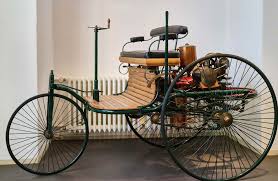
- Internal combustion engines (ICE): Small, practical gasoline engines arrived as the most flexible solution. Karl Benz’s three-wheeled Motorwagen (1886) and Gottlieb Daimler’s gasoline engine advances made the ICE the dominant choice.
By the 1910s, ICE vehicles outpaced steam and electric for range and refueling convenience.
4. Pioneers and patents: Benz, Daimler, Olds, and Ford:
Key individuals and companies pushed the automotive milestones forward:
- Karl Benz (1886): Often credited with the first true automobile powered by an internal combustion engine — the Benz Patent-Motorwagen.
- Gottlieb Daimler & Wilhelm Maybach: Developed high-speed petrol engines and a carburetor, enabling practical motor cars.
- Ransom Olds & Henry Ford: Early American innovators who pioneered mass-market strategies. Olds (Curved Dash Oldsmobile) used assembly techniques; Ford revolutionized production with the moving assembly line.
- Émile Levassor & Panhard (France): Standardized vehicle layout (engine front, transmission, rear-wheel drive) that became the template for most cars.
These figures illustrate a pattern: invention followed by commercial refinement and then system-level industrialization.
5. Mass production and the Model T revolution:
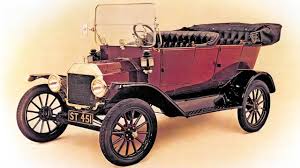
The most transformative automotive milestone arguably is Ford’s Model T (introduced 1908) and the moving assembly line (1913). Henry Ford’s methods cut production time dramatically and reduced costs, making cars affordable for the middle class.
- Impact: Personal mobility became widespread; rural households gained market access; suburbs became viable.
- Standardization: Component standardization and supplier networks matured.
- Economic ripple: New industries — tires, oil, road construction, service garages — expanded rapidly.
The Ford approach changed not only how cars were made but how industries organized production.
6. The golden age: styling, performance and global adoption (1920–1950):
Between the world wars and after WWII, cars evolved in performance, comfort, and global presence.
- Design: Streamlining influenced styling; coachbuilding gave way to integrated mass-produced bodies.
- Performance: Improved engines, transmissions, and brakes increased speed and safety.
- Global spread: Europe, North America, Japan (and later South Korea) developed distinct automotive cultures and industries.
- Luxury & sports: Brands like Rolls-Royce, Mercedes, Ferrari, and Jaguar nurtured performance and prestige segments.
Automobiles became symbols of status and modernity across the globe.
7. Postwar boom and the safety revolution (1950–1980):
Post-1945 economic growth dramatically increased car ownership. But rising speeds and traffic fatalities prompted safety innovations.
- Seat belts and safety research: Early 1960s research ushered in belt adoption; later, airbags and crumple zones became standard.
- Regulation: Governments began to require safety features and crash testing.
- Comfort & convenience: Disc brakes, power steering, and automatic transmissions became widespread.
- International consolidation: Japanese manufacturers (Toyota, Honda, Nissan) rose with reliable, efficient models, reshaping markets.
Safety, comfort and reliability became major selling points.
8. Emissions, regulation, and the catalyst for change (1970s–1990s):
The environmental cost of cars became clear with urban smog and pollution. This period saw intensive regulatory responses.
- Emission controls: Catalytic converters and unleaded gasoline were introduced to reduce harmful outputs.
- Fuel crises & efficiency: Oil shocks of the 1970s forced manufacturers to prioritize fuel efficiency.
- Clean Air Acts & standards: Governments implemented emissions standards and testing regimes.
- Technological responses: Engine management systems (electronic fuel injection, ECU) improved efficiency and emissions control.
Environmental policy reframed automotive engineering priorities.
9. Electronics, infotainment and the reliability era (1990s–2010s):
Rapid advances in electronics changed what cars could do.
- Engine control units (ECU): Precise fuel/ignition control improved power, emissions and economy.
- Safety electronics: ABS, traction control, electronic stability control (ESC) reduced accidents.
- Connectivity & infotainment: Onboard navigation, Bluetooth, and later smartphone integration reshaped user expectations.
- Quality & reliability: Japanese and Korean manufacturers became benchmarks for long-term durability.
Cars increasingly became software-enabled devices as much as mechanical machines.
10. The rise of electrification and the modern EV era:
Electric vehicles (EVs) are the current major chapter in the evolution of cars.
- Early EVs vs modern battery tech: Early 20th-century electrics faded due to limited range; lithium-ion batteries changed that.
- Tesla & EV mainstreaming: Tesla’s success combined batteries, software-defined vehicles, and direct-sales models to drive adoption.
- Legacy OEM responses: Traditional automakers launched EV lines and hybrids to meet regulation and market demand.
- Charging infrastructure: Public and private charging networks expanded, with fast chargers reducing range anxiety.
Electrification marks a systemic shift in vehicle powertrains and energy networks.
11. Autonomous driving, connectivity and the car as a platform:
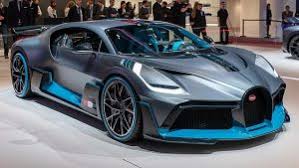
The latest automotive milestones center on autonomy and connected services.
- Levels of autonomy: From driver assistance (Level 1–2) to full autonomy (Level 4–5), driven by sensors, AI and redundancy.
- Connected cars: Over-the-air updates, V2X (vehicle-to-everything) communication, and cloud services make cars part of digital ecosystems.
- Mobility-as-a-Service (MaaS): Ride-hailing, shared mobility and automated fleets could reshape ownership models.
Autonomy introduces legal, ethical and infrastructure challenges about responsibility, data privacy, and safety.
12. Global diffusion: how cars transformed societies and cities:
Cars changed city patterns and social structures:
- Suburbanization: Car-oriented urban planning encouraged sprawl and commuting culture.
- Economic landscapes: New jobs (assembly, dealerships, maintenance) and industries (petroleum, insurance) grew.
- Environmental impact: Urban air quality, noise, and land use tradeoffs became persistent policy challenges.
- Access & inequality: Car ownership remains uneven globally, shaping access to jobs and services.
Understanding this diffusion helps explain many modern urban and environmental debates.
13. Key automotive milestones — timeline table:
| Year / Period | Milestone |
| ~1769 | Steam-powered road vehicles (early experiments) |
| 1886 | Karl Benz Patent-Motorwagen — widely cited first automobile |
| 1890s | Daimler and others develop practical gasoline engines |
| 1908 | Ford Model T introduced |
| 1913 | Moving assembly line introduced by Ford |
| 1920s–30s | Mass adoption in US/Europe; styling & coachbuilding |
| 1945–1960s | Postwar expansion; safety research begins |
| 1970s | Emission controls, catalytic converters, fuel crises |
| 1990s | Electronic controls, ABS, airbags become common |
| 2000s | Hybrid vehicles enter mainstream (e.g., Prius) |
| 2010s | EV commercialization accelerates; Tesla prominence |
| 2020s | Rapid electrification & driver assist systems; EV charging buildout |
| 2030s+ | Anticipated increased autonomy and electrified fleets |
14. Environmental and social impacts:
Automobiles brought economic benefits but also environmental costs:
- Emissions: Internal combustion engines produce CO₂, NOx and particulates.
- Resource use: Steel, plastics, rare earths and battery minerals require mining and energy.
- Land use: Parking, roads and suburban sprawl consume land and shape ecosystems.
- Social: While cars expand mobility, they also contribute to inequality when access is limited.
Transitioning to low-carbon mobility is both a technical and social challenge.
15. Cultural influence: cars in music, film, and identity:
Cars shape identity and culture: think 1950s American cruising culture, British sports cars, or Japanese tuner scenes. Movies (e.g., “The Fast and the Furious”), music lyrics, and festivals (auto shows) reinforce automotive symbolism — speed, freedom, rebellion, or status.
17. Conclusion: where the automotive history timeline goes next:
The history of automobiles is an unfolding story. From steam to gasoline, from handcrafted coachwork to automated factories, and now from fossil fuels to batteries and software, each chapter reflects technology and society’s priorities. The next decades will likely be defined by decarbonization, digitalization, and reimagined mobility that balances convenience, sustainability, and equity.
18. External links:
- Encyclopaedia Britannica — automotive history overview: https://www.britannica.com/technology/automobile
- Smithsonian / National Museum of American History — transportation collections: https://americanhistory.si.edu/collections/object-groups/transportation
- History.com — early automobiles and inventions: https://www.history.com/topics/inventions/automobiles
- SAE International — technical standards and history: https://www.sae.org/
- International Energy Agency (IEA) — EV adoption and energy impacts: https://www.iea.org/
- United Nations Environment Programme (UNEP) — transport and environment: https://www.unep.org/